During a recent TikTok doomscroll, I came across a video from a company selling Moroccan dresses. The clip showed a beautiful woman twirling in a stunning yellow gown labelled a “caftan” in the caption. Scrolling through the comments, one user corrected them: “That’s a takchita, not a caftan!” It made me pause and think, does it really matter?
They were not wrong, it was indeed a takchita, the word used to describe a two piece occasion dress, but for some reason the word “caftan” has become a universal term to describe different types of cultural attire, and not just exclusive to Moroccan dress. Language is important, and clothes are symbolic of culture and with that comes norms and expectations attributed to the different types of dress. Oftentimes, these terms can be used to market ‘ethnic’ clothes to the masses and can be drenched in the dregs of post colonialism. Say the word caftan and, if like me you were raised in the UK, you’ll probably think of a long, flowy wide sleeved garment. Perhaps a beach cover up of sorts or a “boho” labelled long tunic one might wear to Glastonbury Festival. Each type of Moroccan attire, as with any other cultures’ traditional dress, carries with it significance and purpose.
What’s a Moroccan caftan?

In Morocco, a caftan is a one piece dress, usually with a button (3qad) and loop opening on the neckline that can often run right the way down the length of the garment, from neck to feet. It wasn’t always that way though, in the 17th century the Moroccan caftan is documented to have actually been a sleeveless garment before it morphed into the long sleeve design as is more common today. This was akin to the caftans seen in other Arab nations at that time, namely the Levant regions where they were already accustomed to the traditional long sleeve designs.
Luxury velvet and gold detail Moroccan caftan


The Takchita
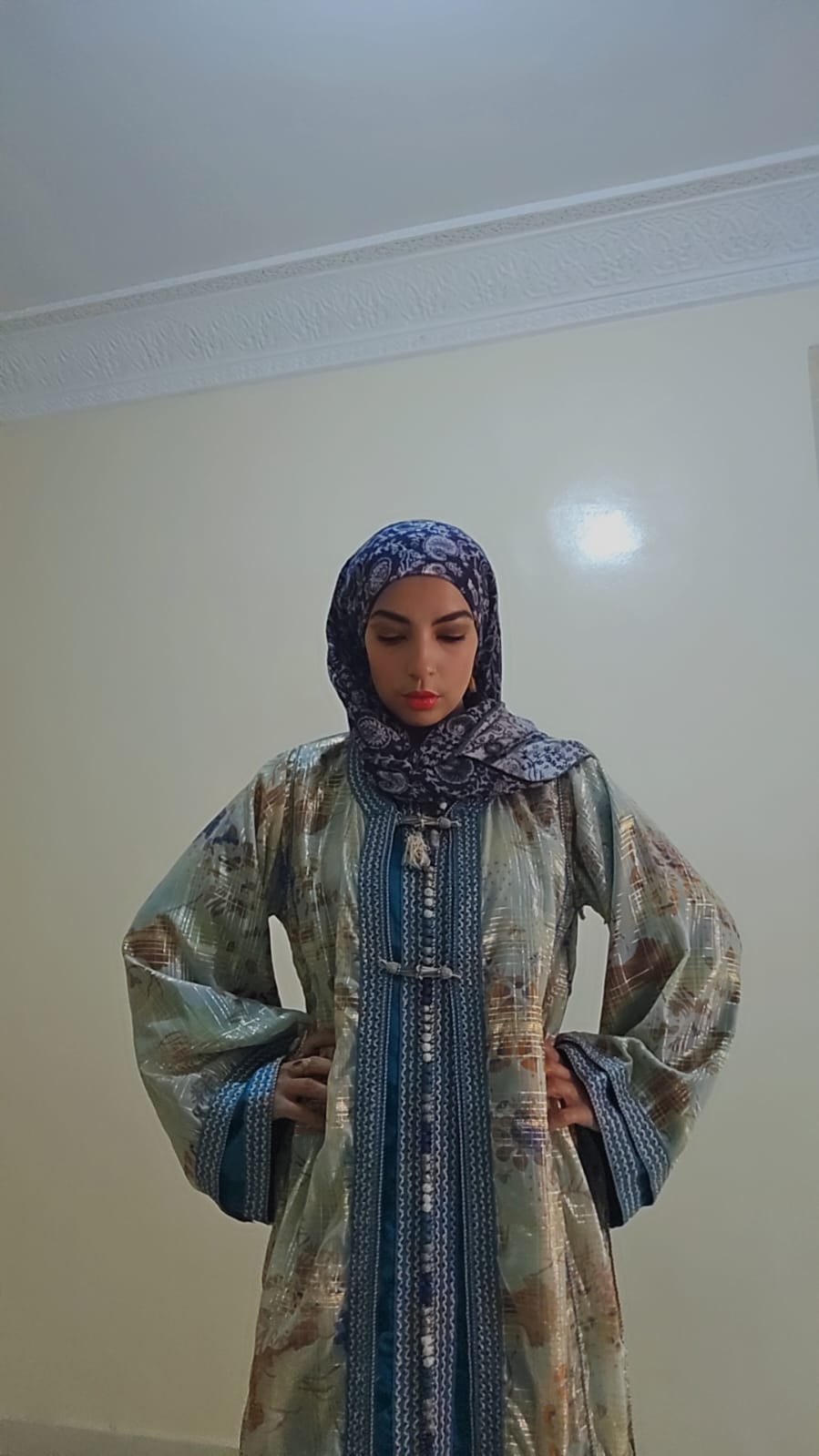
The takchita often consists of an undergarment that resembles the caftan, with layers over it; usually two but sometimes more. Takchitas are reserved for the most ceremonial of occasions, and though caftans also have a place within the bridal scene, takchitas are normally worn during the “Amira”/Princess phase of the bride’s wedding ceremony where the bride is paraded joyfully on a raised chair held by the negafa to a whole lot of hype and fanfair.


The Djellaba

Another prominent dress in Morocco is the djellaba, worn by both men and women, is more of an outdoor garment, that resembles the caftan in many ways, but with one clear distinction; the hood. I don’t think its possible to consider it a djellaba without the notably pointed hood.
As fashion and cultural norms evolve, you will see many variations of each type of dress. From fabric choices, cuts and fittings, length and looseness. The garments mentioned here are just a few, but these are their names and names are identity and identity is important.

Leave a Reply